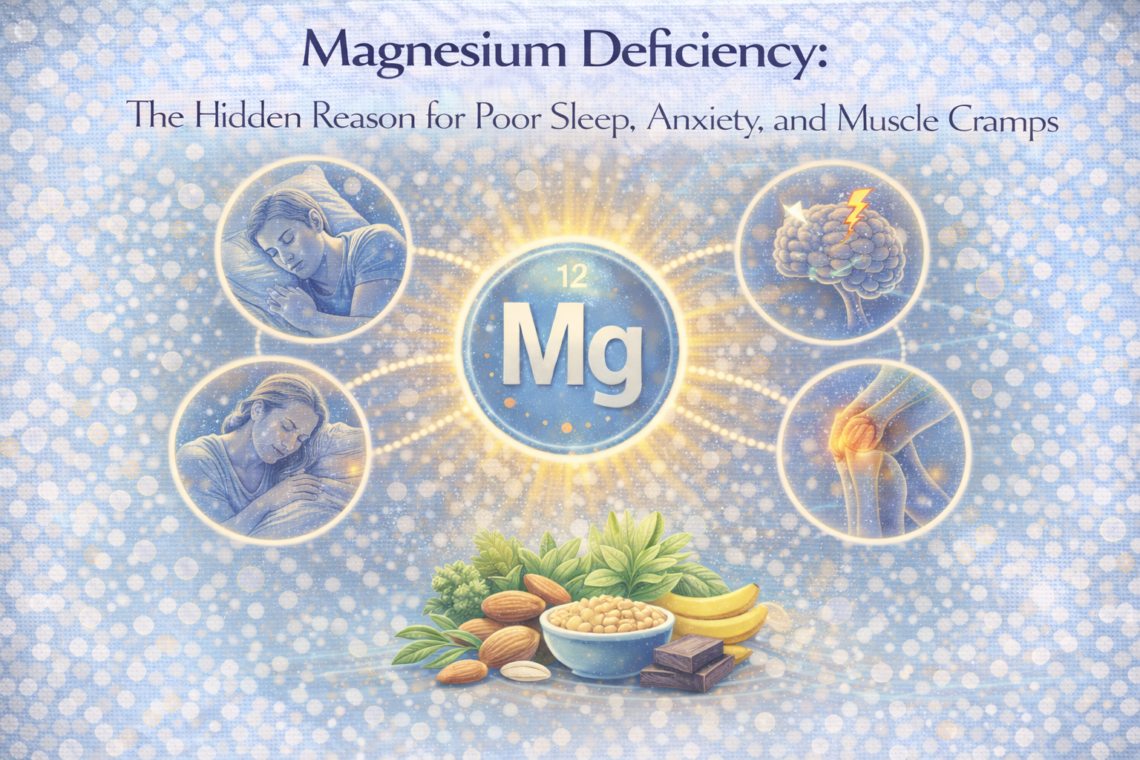
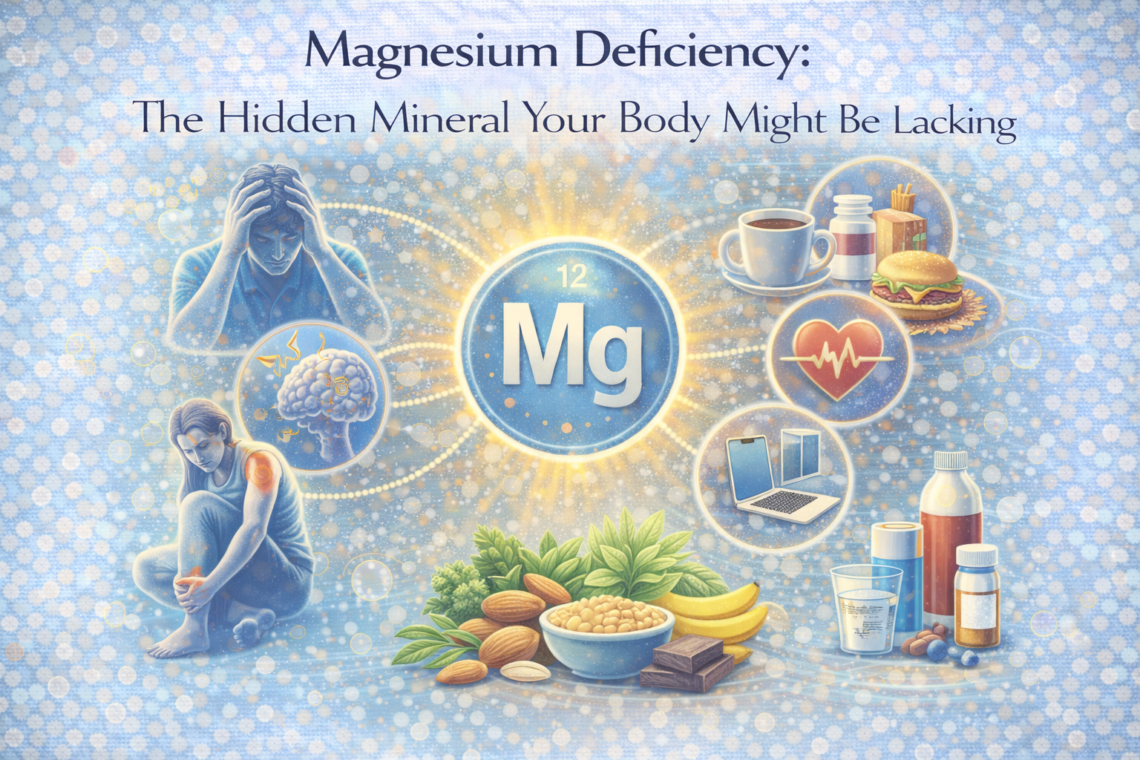
Introduction Magnesium is one of the most important minerals in the human body, yet a large percentage of people don’t get enough of it. Often called the “relaxation mineral,” magnesium plays a critical role in sleep quality, muscle function, nerve health, and stress regulation. Unfortunately, magnesium deficiency is common—and frequently overlooked. Why Magnesium Is Essential for the Body Magnesium is involved in more than 300 biochemical reactions, including: Without adequate magnesium, multiple body systems begin to struggle. Common Symptoms of Magnesium Deficiency Many symptoms develop slowly and are mistaken for normal stress or aging. Long-term deficiency can increase the risk…