Introduction
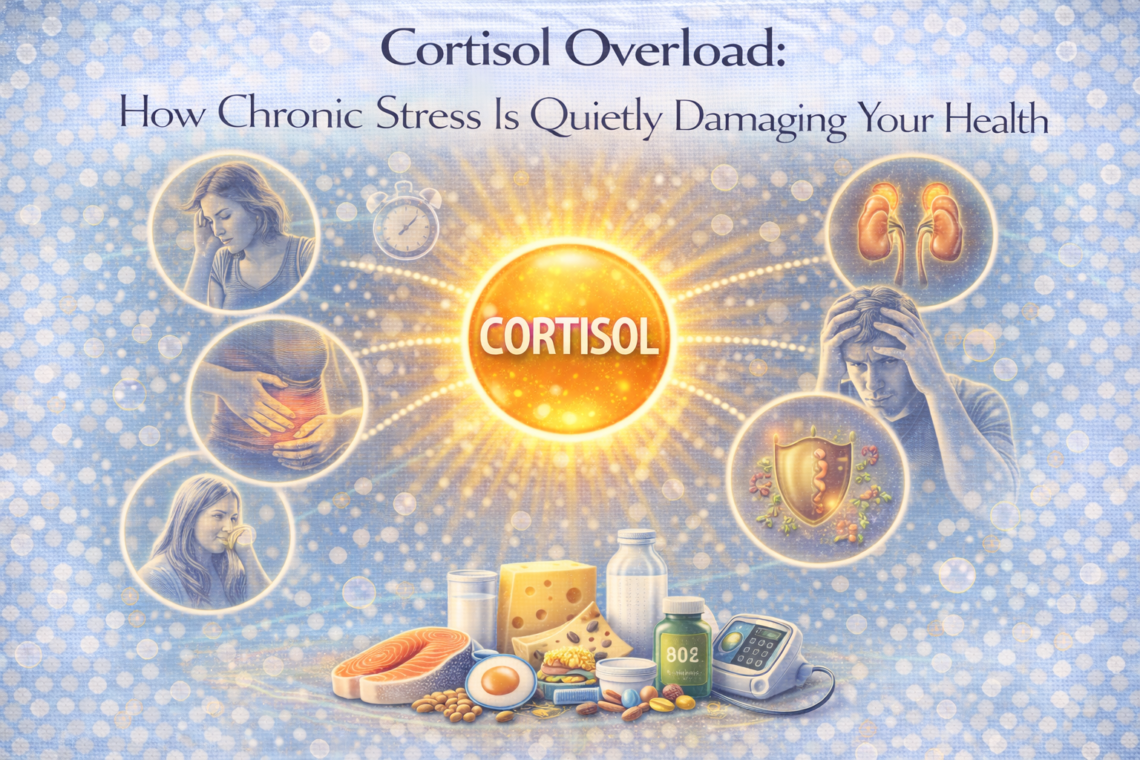
Stress has become a normal part of modern life—but when stress becomes constant, it can seriously harm your body. At the center of this problem is cortisol, the primary stress hormone. While cortisol is essential for survival, chronically high levels can silently damage your physical and mental health.
Understanding cortisol overload is the first step toward restoring balance.
What Is Cortisol?
Cortisol is a hormone released by the adrenal glands in response to stress. It helps regulate:
- Blood sugar levels
- Metabolism
- Blood pressure
- Inflammation
- Sleep–wake cycles
In short bursts, cortisol is helpful. The problem begins when stress never turns off.
What Is Cortisol Overload?
Cortisol overload happens when your body stays in a constant “fight-or-flight” mode. Instead of returning to normal levels after stress, cortisol remains elevated throughout the day.
This chronic state slowly wears down your body systems.
Common Symptoms of High Cortisol
- Persistent fatigue
- Weight gain (especially belly fat)
- Anxiety or irritability
- Poor sleep or insomnia
- Sugar and junk food cravings
- Brain fog
- Frequent illness
- High blood pressure
Many people experience these symptoms without realizing cortisol is the cause.
Main Causes of Chronic High Cortisol
- Ongoing emotional stress
- Poor sleep habits
- Overtraining or excessive exercise
- High caffeine intake
- Skipping meals
- Long working hours with little recovery
How Cortisol Affects Your Body
1. Weight Gain
High cortisol promotes fat storage, especially around the abdomen.
2. Weak Immune System
Chronic cortisol suppresses immune function, making you more prone to illness.
3. Hormonal Imbalance
Elevated cortisol disrupts insulin, thyroid, and reproductive hormones.
4. Brain & Memory Issues
Long-term stress affects memory, focus, and emotional regulation.
Natural Ways to Lower Cortisol Levels
1. Improve Sleep Quality
Aim for 7–9 hours of consistent, deep sleep.
2. Eat Balanced Meals
Include protein, healthy fats, and complex carbs to stabilize blood sugar.
3. Reduce Caffeine
Too much caffeine keeps cortisol elevated throughout the day.
4. Practice Stress-Reducing Activities
- Deep breathing
- Meditation
- Yoga
- Walking in nature
5. Exercise Smartly
Moderate exercise lowers cortisol; excessive intense workouts raise it.
Foods That Help Reduce Cortisol
- Fatty fish (omega-3s)
- Dark chocolate (in moderation)
- Green tea
- Leafy greens
- Nuts and seeds
Final Thoughts
Cortisol is not the enemy—but chronic stress is. By managing daily stress, improving sleep, and nourishing your body properly, you can bring cortisol back into balance and protect your long-term health.
🧠 Calm isn’t a luxury—it’s a biological necessity.
Magnesium Deficiency: The Hidden Mineral Your Body Might Be Lacking click here…
Hidden Dehydration: Why Drinking Water Alone Is Not Enough click here…
Vitamin D Deficiency: Symptoms, Causes, and Natural Ways to Fix It click here…