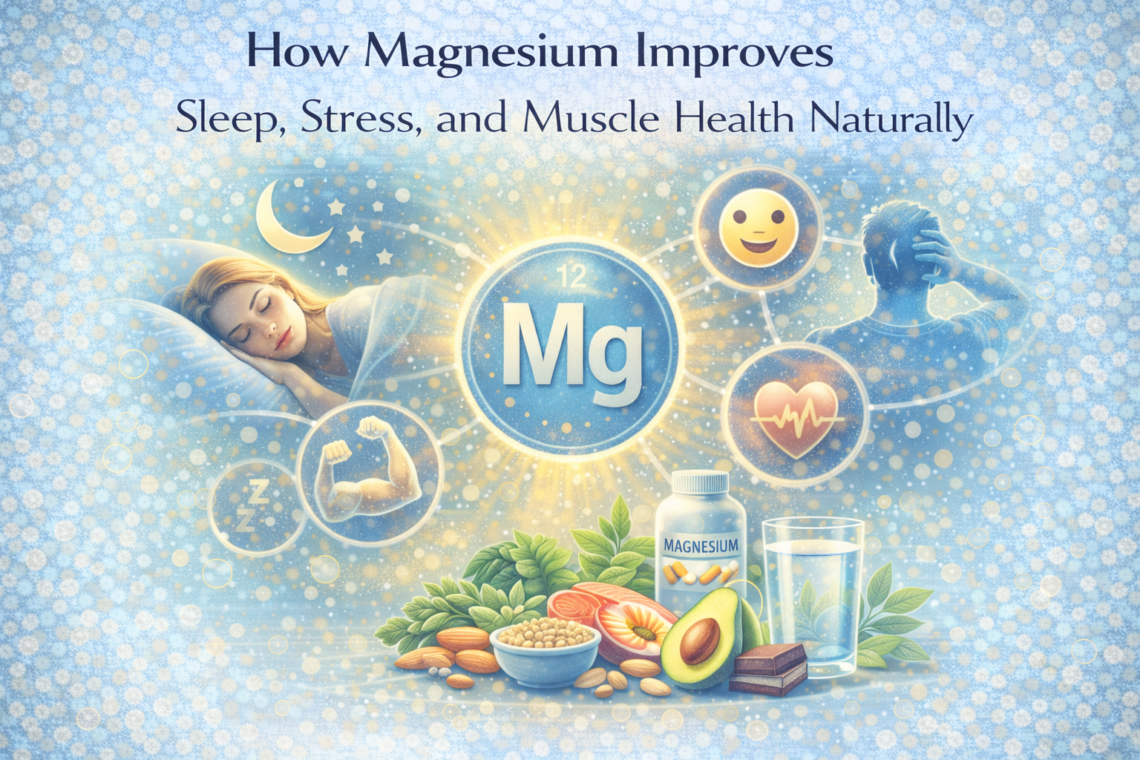
Magnesium is one of the most important minerals your body needs, yet many people don’t get enough of it. This essential nutrient plays a key role in sleep quality, stress management, muscle function, and overall health. A magnesium deficiency can silently affect your daily energy, mood, and recovery.
What Is Magnesium and Why Is It Important?
Magnesium is involved in more than 300 biochemical reactions in the body. It helps regulate nerves, muscles, blood sugar levels, and blood pressure. It also supports the production of energy and promotes relaxation of the nervous system.
Without enough magnesium, the body struggles to maintain balance, leading to fatigue, tension, and poor sleep.
Common Signs of Magnesium Deficiency
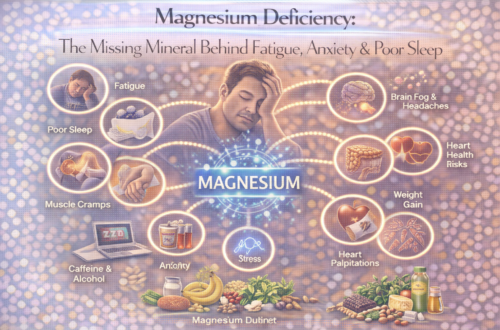
Many people experience symptoms without realizing magnesium is the cause. Common signs include:
- Muscle cramps or twitching
- Trouble sleeping or insomnia
- Anxiety and irritability
- Frequent headaches or migraines
- Fatigue and weakness
Long-term deficiency may increase the risk of heart issues and bone weakness.
How Magnesium Helps Improve Sleep
Magnesium activates calming neurotransmitters in the brain and helps regulate melatonin, the hormone responsible for sleep. It relaxes muscles and reduces nighttime restlessness, making it easier to fall asleep and stay asleep.
People who take adequate magnesium often report deeper, more restful sleep.
Magnesium for Stress and Mental Calm
Magnesium helps control the stress hormone cortisol. When levels are balanced, the nervous system stays calm and resilient. This makes magnesium especially helpful for people dealing with daily stress, anxiety, or mental fatigue.
Role of Magnesium in Muscle and Joint Health
Magnesium supports proper muscle contraction and relaxation. It prevents muscle stiffness, cramps, and soreness, especially after exercise. Athletes and physically active people benefit greatly from adequate magnesium intake.
Best Natural Sources of Magnesium
You can get magnesium naturally from foods such as:
- Leafy green vegetables (spinach, kale)
- Nuts and seeds (almonds, pumpkin seeds)
- Whole grains
- Bananas and avocados
- Dark chocolate
Should You Take Magnesium Supplements?
If your diet lacks magnesium, supplements can help. Magnesium glycinate and magnesium citrate are commonly used forms. Always follow recommended dosages and consult a healthcare professional if needed.
Final Thoughts
Magnesium is a simple yet powerful nutrient that supports sleep, stress relief, and muscle health. Adding magnesium-rich foods to your daily diet can significantly improve your overall well-being naturally.
Heart Health Matters: Simple Daily Habits to Maintain a Strong and Healthy Heart click here…
Blood Sugar Balance: Natural Ways to Prevent Diabetes Without Medication cliock here…
Hydration and Health: How Drinking Enough Water Impacts Your Body and Mind click here…




One comment on “How Magnesium Improves Sleep, Stress, and Muscle Health Naturally”