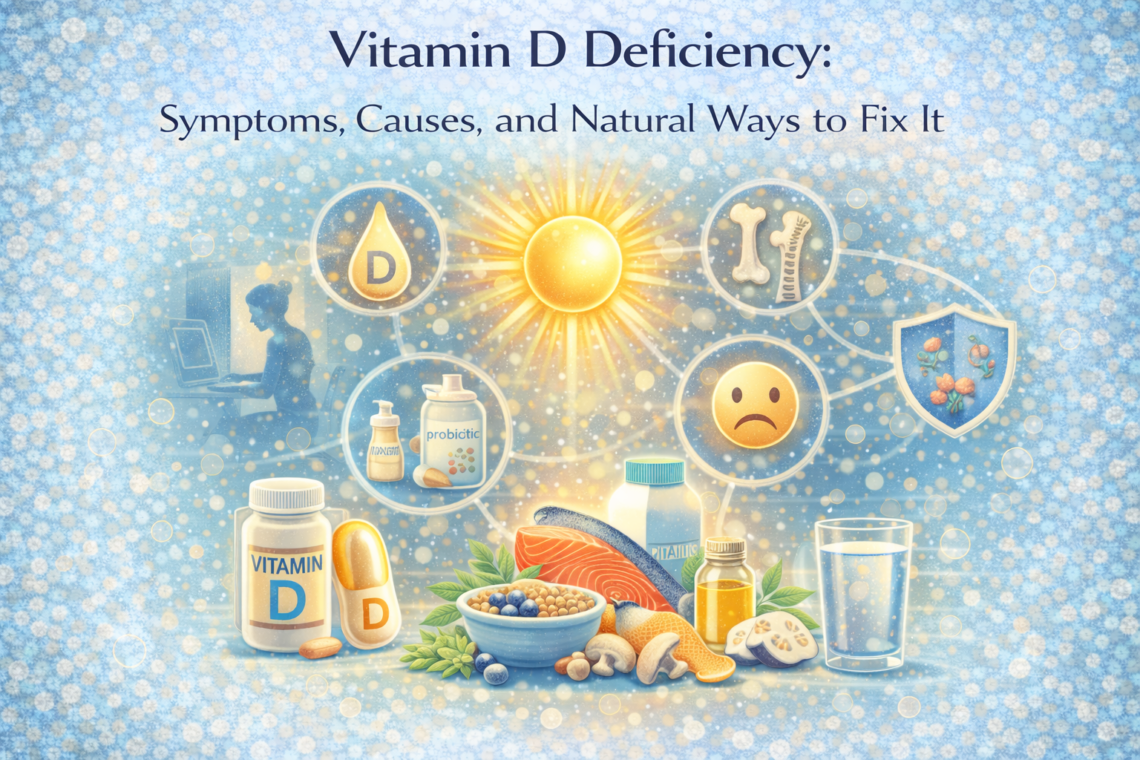
Introduction
Vitamin D is often called the “sunshine vitamin,” yet millions of people worldwide are deficient in it—even in sunny regions. Vitamin D plays a crucial role in bone strength, immunity, mental health, and overall well-being. A deficiency can quietly impact your health before symptoms become noticeable.
Understanding vitamin D deficiency and how to fix it naturally can help you stay stronger, healthier, and more energetic.
What Is Vitamin D and Why Is It Important?
Vitamin D helps the body:
- Absorb calcium for strong bones and teeth
- Support immune system function
- Reduce inflammation
- Maintain muscle strength
- Support mood and mental health
Without enough vitamin D, these systems begin to weaken.
Common Symptoms of Vitamin D Deficiency
Many people don’t realize they’re deficient until symptoms worsen. Common signs include:
- Frequent illness or infections
- Bone pain or back pain
- Fatigue and low energy
- Muscle weakness or cramps
- Hair loss
- Mood changes, including depression
Causes of Vitamin D Deficiency
Several factors can contribute to low vitamin D levels:
- Limited sun exposure
- Spending most time indoors
- Darker skin tone
- Poor diet
- Aging
- Digestive disorders affecting absorption
Modern indoor lifestyles are a major reason deficiency is so common.
Who Is at Higher Risk?
- Office workers and remote workers
- Older adults
- People with obesity
- Individuals with lactose intolerance
- Those who regularly use sunscreen excessively
Natural Ways to Fix Vitamin D Deficiency
1. Get Safe Sun Exposure
Spending 15–30 minutes in sunlight several times a week helps the body produce vitamin D naturally. Expose arms and legs when possible.
2. Eat Vitamin D–Rich Foods
Include:
- Fatty fish (salmon, tuna, sardines)
- Egg yolks
- Mushrooms
- Fortified milk and cereals
3. Improve Gut Health
A healthy digestive system helps absorb vitamin D efficiently. Eating probiotics and fiber-rich foods can help.
4. Consider Supplements (If Needed)
When diet and sunlight aren’t enough, vitamin D supplements may help—but always consult a healthcare professional before starting.
How Much Vitamin D Do You Need?
General recommendations:
- Adults: 600–800 IU daily
- Older adults: 800–1000 IU daily
Needs may vary based on health conditions and lifestyle.
Health Risks of Long-Term Deficiency
Untreated vitamin D deficiency can increase the risk of:
- Osteoporosis
- Weak immunity
- Heart disease
- Autoimmune disorders
- Depression
Early correction can prevent these complications.
Final Thoughts
Vitamin D deficiency is common—but also preventable. With mindful sun exposure, nutrient-rich foods, and healthy habits, you can restore optimal vitamin D levels naturally and protect your long-term health.
☀️ A little sunshine goes a long way toward better health.
Blood Sugar Balance: Natural Ways to Prevent Diabetes Without Medication click here….
Hydration and Health: How Drinking Enough Water Impacts Your Body and Mind click here….
Heart Health Matters: Simple Daily Habits to Maintain a Strong and Healthy Heart clcik here…



One comment on “Vitamin D Deficiency: Symptoms, Causes, and Natural Ways to Fix It”