
🌙 Introduction
In today’s fast-paced digital world, quality sleep has become a luxury for many people. Late-night screen time, stress, and irregular routines often disrupt our natural sleep cycle, leading to fatigue, anxiety, and poor mental health.
This is where sleep hygiene comes in. Sleep hygiene refers to healthy habits and environmental factors that help you achieve deep, restorative sleep. Improving sleep hygiene can dramatically enhance both physical and mental well-being.
😴 What Is Sleep Hygiene?
Sleep hygiene is a set of daily habits and lifestyle practices that promote consistent, uninterrupted, and high-quality sleep.
It does not mean strict rules or medication — instead, it focuses on simple routines that align your body clock with natural sleep rhythms.
🚨 Signs of Poor Sleep Hygiene
If you experience these symptoms, your sleep hygiene may need improvement:
- Difficulty falling asleep
- Frequent nighttime awakenings
- Feeling tired after waking up
- Brain fog or poor concentration
- Irritability or mood swings
- Daytime sleepiness
🌿 Simple Sleep Hygiene Habits That Work
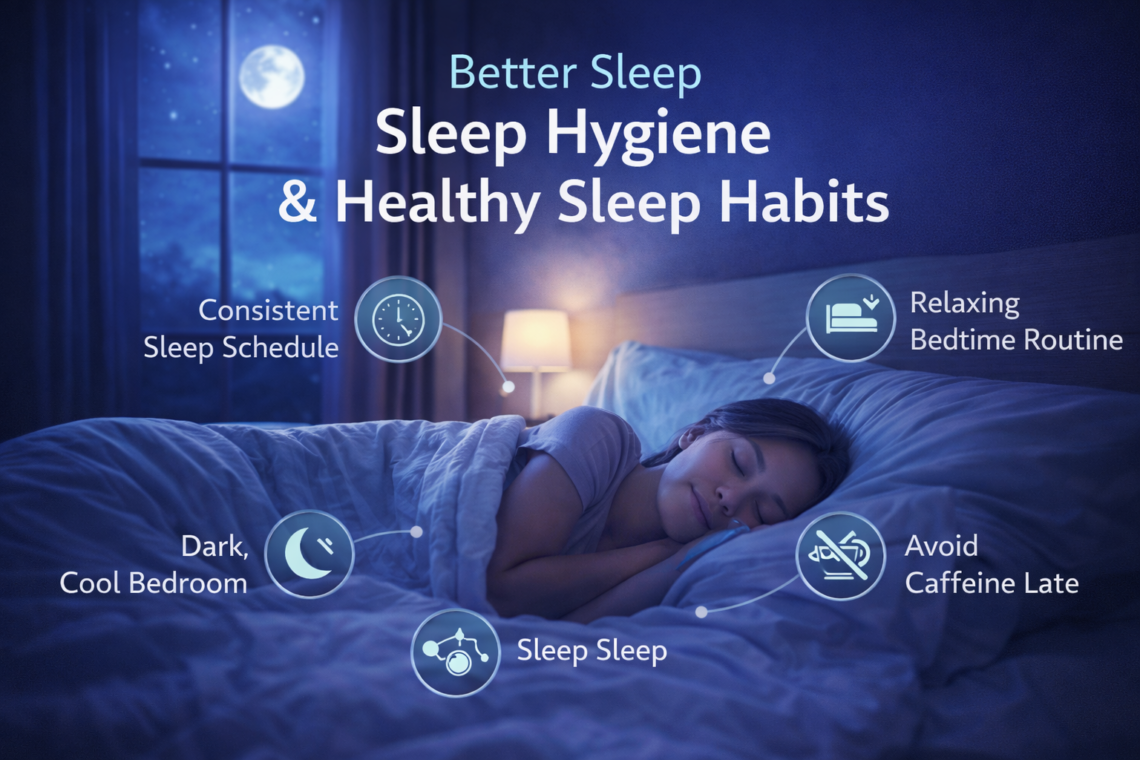
1️⃣ Maintain a Consistent Sleep Schedule
Go to bed and wake up at the same time every day — even on weekends. This helps regulate your circadian rhythm.
2️⃣ Reduce Screen Time Before Bed
Blue light from phones and laptops suppresses melatonin.
👉 Stop using screens at least 1 hour before bedtime.
3️⃣ Create a Sleep-Friendly Environment
- Keep the room dark and quiet
- Use comfortable bedding
- Maintain a cool temperature (18–22°C)
4️⃣ Avoid Stimulants Late in the Day
Limit caffeine, nicotine, and heavy meals after evening hours.
5️⃣ Practice Relaxation Techniques
- Deep breathing
- Meditation or mindfulness
- Light stretching
- Reading a physical book
6️⃣ Get Daytime Sunlight & Physical Activity
Natural light exposure and regular exercise improve nighttime sleep quality.
🧠 How Sleep Hygiene Improves Mental Health
Good sleep hygiene directly supports mental wellness:
- Reduces stress and anxiety
- Improves memory and focus
- Balances mood and emotions
- Lowers risk of depression
- Enhances emotional resilience
Quality sleep allows the brain to reset, process emotions, and restore energy.
❌ Common Sleep Myths (Debunked)
Myth: Watching TV helps you sleep
✔️ Reality: Screens stimulate the brain
Myth: You can catch up on sleep on weekends
✔️ Reality: Consistency matters more
Myth: Alcohol improves sleep
✔️ Reality: It disrupts deep sleep cycles
💡 Tips for Long-Term Sleep Improvement
- Be patient — results take time
- Track sleep habits in a journal
- Avoid naps longer than 30 minutes
- Reduce late-night stress
Small changes lead to big improvements when practiced consistently.
🌟 Conclusion
Sleep hygiene is a powerful yet often overlooked tool for improving sleep quality and mental health. By making small daily changes, you can enjoy deeper sleep, better focus, and improved emotional well-being.
🌙 Healthy sleep is not optional — it’s essential.
Follow Daily Heath Boosts for more science-backed wellness tips and lifestyle guidance.
7 Health Myths Debunked in 2025: What You Really Need to Know click here..
Health Fair Benefits: Why Preventive Screening Matters for Everyone click here..




3 Comments on “Sleep Hygiene Explained: Simple Habits for Better Sleep & Mental Health”