Gut health has become one of the most talked-about health topics in recent years—and for good reason. Your gut does far more than digest food; it directly influences immunity, mental health, energy levels, and overall wellness.
What Is Gut Health?
Gut health refers to the balance of microorganisms living in your digestive tract. A healthy gut contains beneficial bacteria that help break down food, absorb nutrients, and protect against harmful pathogens.
Why Gut Health Matters
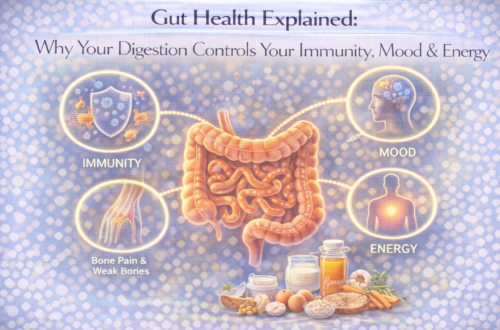
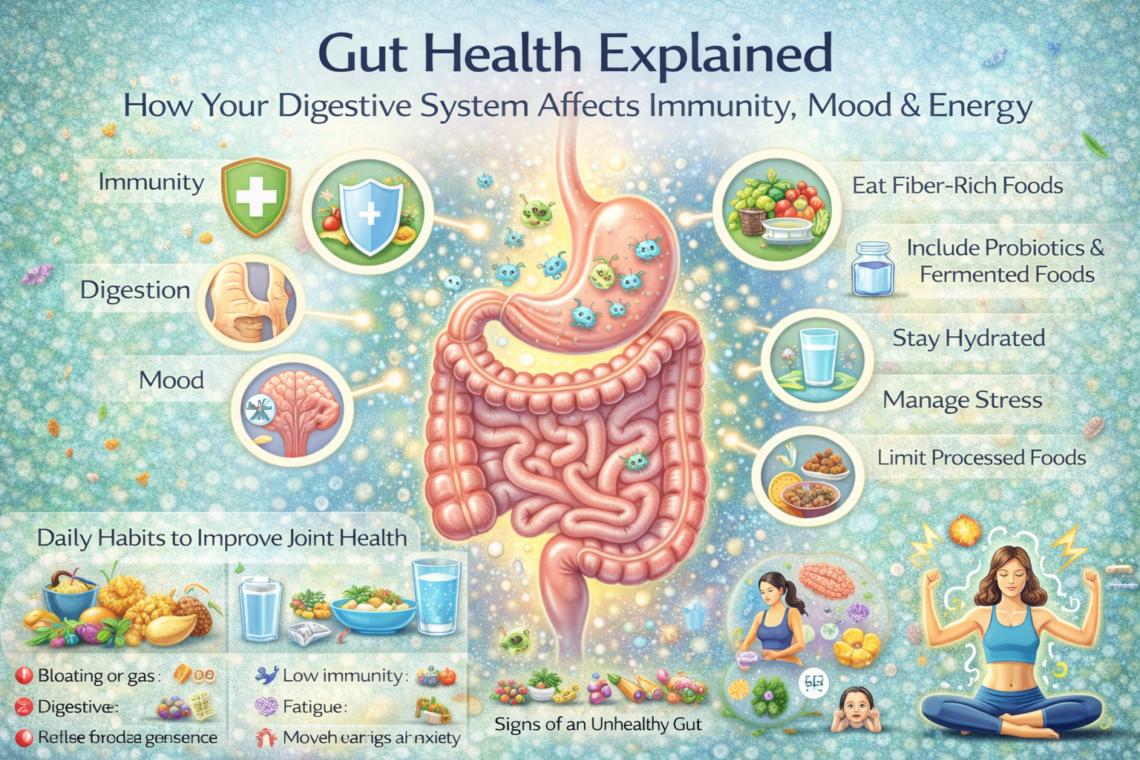
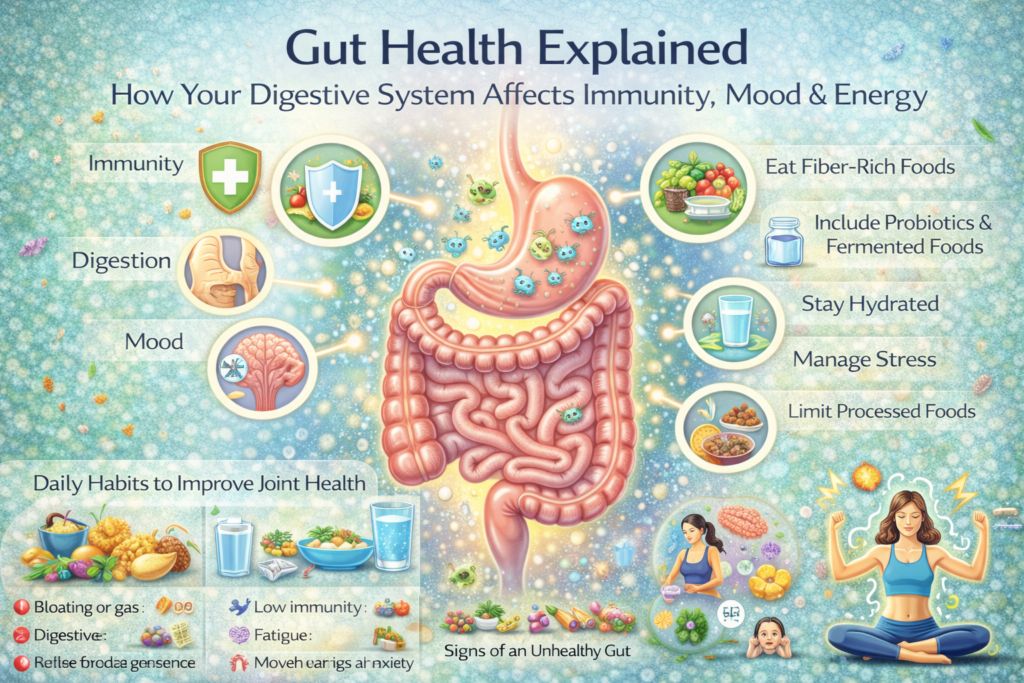
Your gut is often called the “second brain” because it communicates with your nervous system. A healthy gut can:
- Strengthen immunity
- Improve digestion
- Support mental well-being
- Boost daily energy levels
Signs of an Unhealthy Gut
- Bloating or gas
- Frequent digestive discomfort
- Low immunity
- Fatigue
- Mood swings or anxiety
Daily Habits to Improve Gut Health
1. Eat Fiber-Rich Foods
Whole grains, fruits, vegetables, and legumes feed good gut bacteria.
2. Include Probiotics & Fermented Foods
Yogurt, kefir, kimchi, and sauerkraut help restore bacterial balance.
3. Stay Hydrated
Water aids digestion and nutrient absorption.
4. Manage Stress
Chronic stress negatively affects gut bacteria. Practice mindfulness, meditation, or light exercise.
5. Limit Processed Foods
Highly processed foods can disrupt gut balance and increase inflammation.
Gut Health and Mental Wellness
The gut-brain connection means digestive health directly affects mood and focus. A balanced gut may reduce stress, anxiety, and mental fatigue.
Final Thoughts
Improving gut health doesn’t require drastic changes. Small daily habits—better food choices, hydration, and stress management—can lead to powerful long-term health benefits.
Immune System Boosters: Natural Ways to Strengthen Your Body’s Defense click here…
Eye Health Essentials: How to Protect Your Vision Naturally at Any Age click here..
Why Your Digestive System Controls Your Overall Health click here…