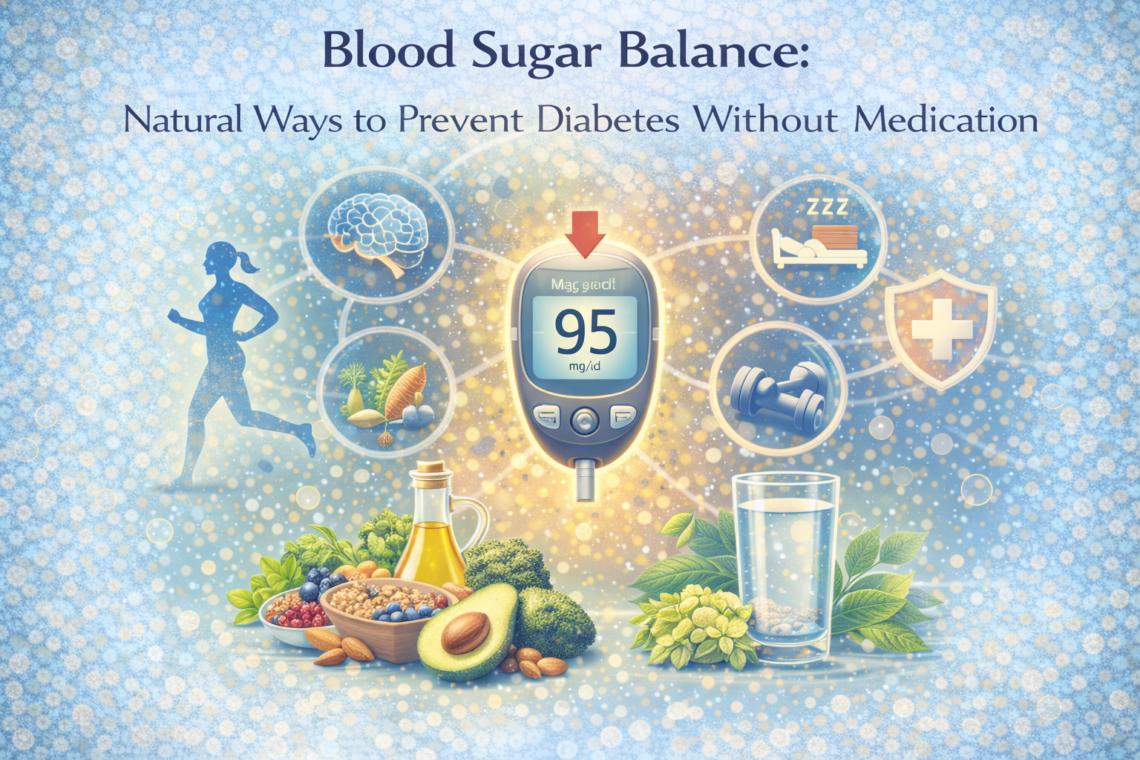
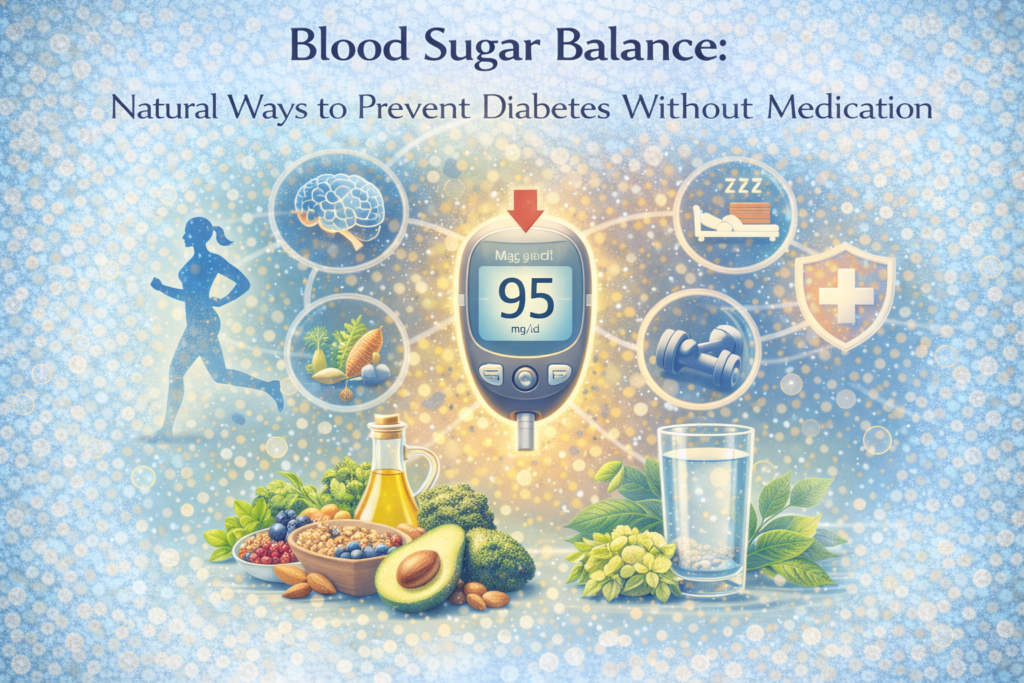
Introduction
Diabetes is becoming one of the most common lifestyle-related diseases worldwide. Rising stress levels, poor diet choices, lack of physical activity, and irregular sleep patterns have made blood sugar imbalance a growing concern—even among young adults.
The good news? In many cases, blood sugar levels can be controlled naturally through healthy daily habits. This article explains effective, science-backed ways to balance blood sugar and reduce the risk of diabetes without relying on medication.
Understanding Blood Sugar
Blood sugar (glucose) is the main source of energy for your body. It comes from the foods you eat—especially carbohydrates. Insulin, a hormone produced by the pancreas, helps move glucose from the bloodstream into cells.
When the body becomes resistant to insulin or doesn’t produce enough of it, blood sugar levels rise, increasing the risk of Type 2 diabetes.
Early Signs of Blood Sugar Imbalance
Recognizing early symptoms can help prevent long-term damage:
- Frequent hunger or cravings
- Fatigue after meals
- Increased thirst
- Frequent urination
- Blurred vision
- Slow wound healing
Ignoring these signs may lead to serious health complications.
Natural Ways to Balance Blood Sugar
1. Eat Low-Glycemic Foods
Low-glycemic foods release glucose slowly into the bloodstream, preventing sudden sugar spikes.
Best options include:
- Whole grains
- Leafy green vegetables
- Nuts and seeds
- Legumes
- Berries
Avoid refined carbohydrates like white bread, pastries, and sugary snacks.
2. Increase Fiber Intake
Fiber slows digestion and glucose absorption, helping maintain stable blood sugar levels.
High-fiber foods:
- Oats
- Chia seeds
- Flaxseeds
- Beans
- Apples and pears
Aim for at least 25–30 grams of fiber daily.
3. Exercise Regularly
Physical activity improves insulin sensitivity and helps muscles absorb glucose efficiently.
Effective exercises include:
- Brisk walking
- Strength training
- Yoga
- Cycling
Even 30 minutes a day can make a big difference.
4. Manage Stress Levels
Chronic stress raises cortisol, which increases blood sugar levels.
Stress-reducing practices:
- Meditation
- Deep breathing
- Journaling
- Nature walks
Mental health plays a direct role in metabolic health.
5. Prioritize Quality Sleep
Lack of sleep interferes with insulin function and increases sugar cravings.
Tips for better sleep:
- Maintain a consistent sleep schedule
- Avoid screens before bedtime
- Reduce caffeine intake in the evening
Aim for 7–8 hours of quality sleep every night.
6. Stay Properly Hydrated
Drinking enough water helps the kidneys flush excess glucose from the bloodstream.
- Drink water throughout the day
- Replace sugary drinks with herbal teas or plain water
Dehydration can worsen insulin resistance.
7. Eat Balanced Meals
Every meal should include:
- Protein (eggs, fish, lentils)
- Healthy fats (avocado, olive oil)
- Complex carbs (whole grains, vegetables)
Balanced meals prevent blood sugar spikes and crashes.
8. Limit Sugar and Processed Foods
Hidden sugars are found in:
- Packaged snacks
- Sauces and dressings
- Soft drinks
Reading food labels can help you avoid unnecessary sugar intake.
Can Lifestyle Changes Really Prevent Diabetes?
Yes. Studies show that people at risk of diabetes can reduce their chances by over 50% through diet, exercise, and lifestyle changes alone. Prevention is not only possible—it’s powerful.
Final Thoughts
Balancing blood sugar naturally is about consistency, not perfection. Small daily habits—healthy meals, regular movement, stress control, and proper sleep—can protect your body from long-term complications.
🌱 Start today, and your future self will thank you.
Gut Health Explained: Why Your Digestive System Controls Overall Wellness CLICK HERE…
Anti-Inflammatory Diet: Foods That Reduce Inflammation and Support CLICK HERE…
Eye Health in the Digital Age: How to Protect Your Vision from Screens CLICK HERE…




2 Comments on “Blood Sugar Balance: Natural Ways to Prevent Diabetes Without Medication”