Introduction
Stress is a normal part of life—but when it becomes chronic, it turns into a silent health destroyer. Many people live in constant stress without realizing how deeply it affects hormones, digestion, immunity, sleep, and even lifespan.
Chronic stress doesn’t just affect your mind—it slowly breaks down your body.
What Is Chronic Stress?
Chronic stress occurs when your body stays in “fight or flight” mode for long periods. This keeps stress hormones like cortisol elevated, preventing the body from repairing and restoring itself.
Hidden Signs of Chronic Stress
- Constant fatigue
- Poor sleep or insomnia
- Brain fog and poor focus
- Digestive issues
- Frequent headaches
- Muscle tension
- Weight gain (especially belly fat)
- Anxiety or irritability
These symptoms often feel “normal” but aren’t.
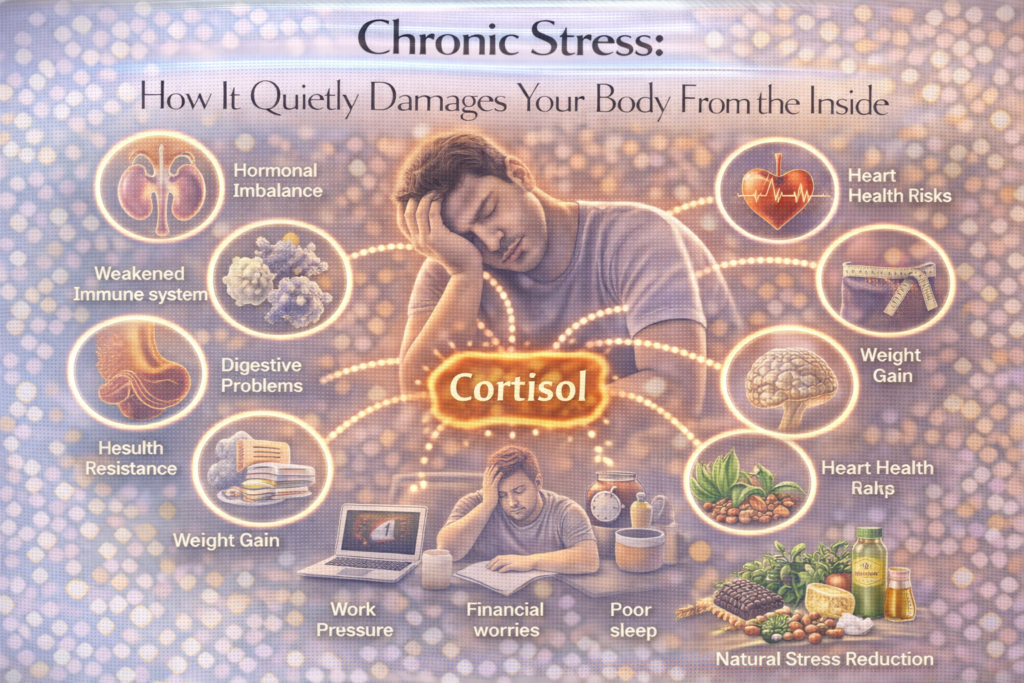
How Chronic Stress Affects Your Body
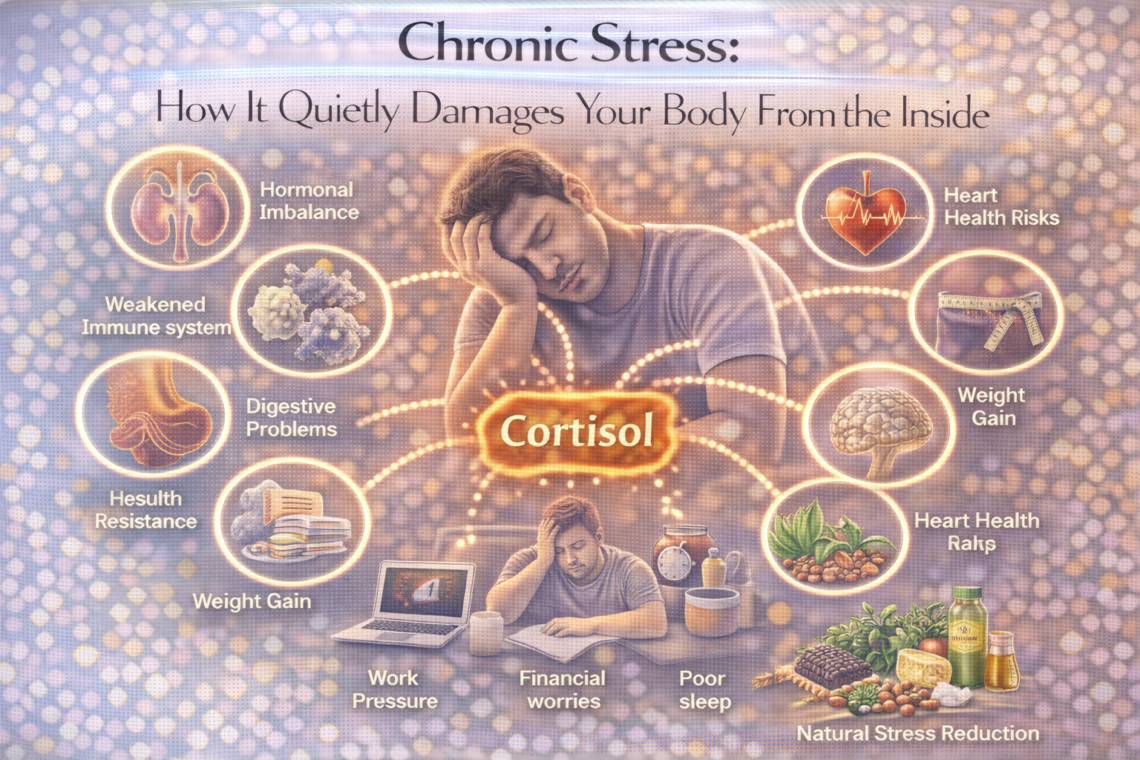
1. Hormonal Imbalance
High cortisol disrupts insulin, thyroid hormones, and sex hormones.
2. Weakened Immune System
Chronic stress lowers immune defenses, increasing infections and slow healing.
3. Digestive Problems
Stress reduces stomach acid and disrupts gut bacteria, leading to bloating and indigestion.
4. Weight Gain
Stress promotes fat storage, especially around the abdomen.
5. Heart Health Risks
Long-term stress raises blood pressure and inflammation, increasing heart disease risk.
Common Causes of Chronic Stress
- Work pressure
- Financial worries
- Poor sleep
- Lack of physical activity
- Constant screen exposure
- Emotional overload
Natural Ways to Reduce Chronic Stress
- Daily physical movement
- Deep breathing or meditation
- Quality sleep routine
- Limiting caffeine
- Spending time outdoors
- Reducing screen time
Foods That Help Lower Stress
- Magnesium-rich foods (leafy greens, nuts)
- Omega-3 fatty acids
- Dark chocolate (in moderation)
- Herbal teas
- Whole, unprocessed foods
Final Thoughts
Chronic stress doesn’t announce itself—it slowly drains your health over time. Managing stress isn’t optional; it’s essential for long-term wellbeing.
🧠 Calm the mind, heal the body.
Electrolyte Imbalance: Why Water Alone Isn’t Enough for Your Body click here…
Hidden Sugar Overload: Why You Feel Tired Even Without Eating Sweets click here…
Inflammation: The Root Cause Behind Most Chronic Diseases click here…