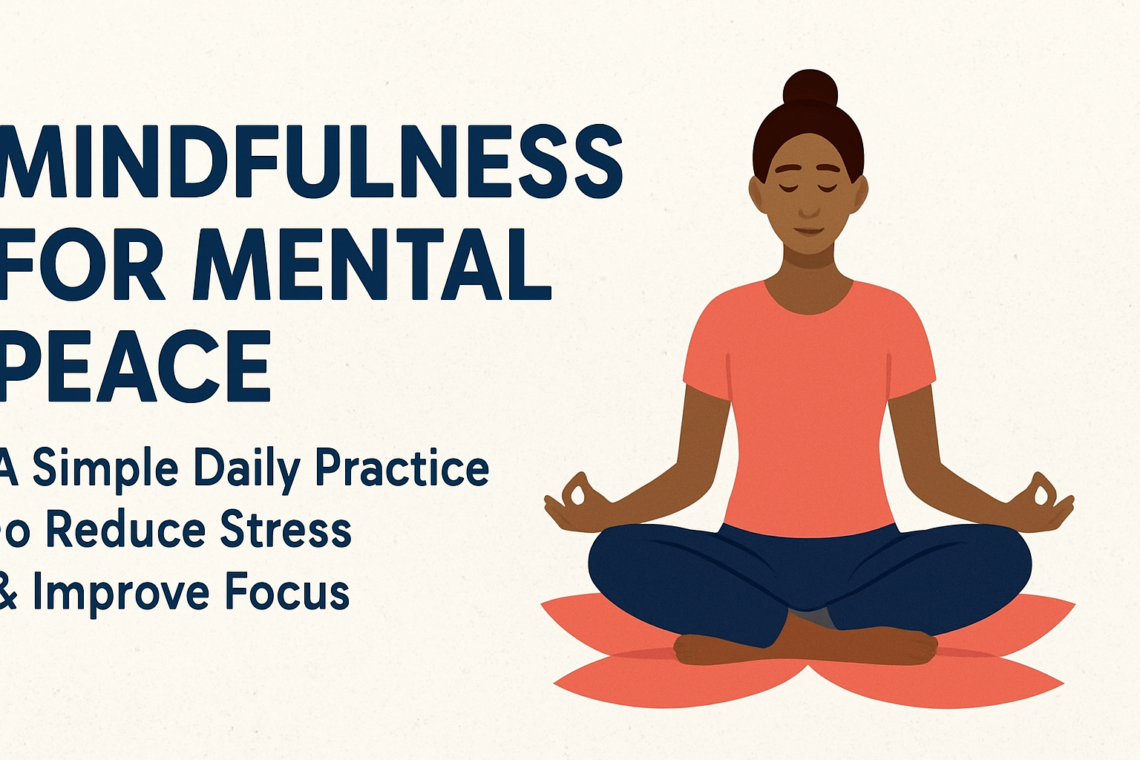

In today’s fast-paced world, mental peace has become a rare luxury. Whether you are a student facing exam pressure, a professional managing deadlines, or someone simply trying to balance life, stress and mental overload are everywhere. This is where mindfulness comes in — a simple yet powerful daily practice that helps calm the mind, improve focus, and enhance emotional well-being.
Mindfulness does not require expensive tools, long hours, or special skills. Just a few minutes each day can bring noticeable changes to your mental health and overall quality of life.
What Is Mindfulness?
Mindfulness is the practice of being fully present in the moment, without judgment. It means paying attention to your thoughts, emotions, breathing, and surroundings instead of constantly worrying about the past or future.
At its core, mindfulness teaches you to:
- Observe your thoughts without reacting
- Accept emotions instead of suppressing them
- Stay grounded in the present moment
This simple awareness creates mental clarity and inner calm.
Why Mindfulness Is More Important Than Ever
Modern lifestyles are filled with:
- Constant screen time
- Information overload
- Academic and work pressure
- Sleep disturbances
- Anxiety and burnout
Over time, this mental strain affects productivity, emotional stability, and physical health. Mindfulness acts as a mental reset button, helping the brain slow down and recover.
Benefits of Daily Mindfulness Practice
1. Reduces Stress and Anxiety
Mindfulness lowers cortisol (the stress hormone) and helps regulate emotional responses. Regular practice makes you less reactive to stressful situations.
2. Improves Focus and Concentration
By training your attention, mindfulness helps improve memory, concentration, and decision-making — especially beneficial for students and working professionals.
3. Enhances Emotional Balance
Mindfulness helps you understand your emotions better, reducing mood swings, irritability, and emotional exhaustion.
4. Supports Better Sleep
Practicing mindfulness before bedtime calms racing thoughts and promotes deeper, more restful sleep.
5. Boosts Overall Mental Well-Being
With consistent practice, people experience increased positivity, patience, and self-awareness.
A Simple 10-Minute Mindfulness Routine (Beginner Friendly)
You don’t need hours. Just 10 minutes daily is enough.
Step 1: Find a Calm Place
Sit comfortably on a chair, bed, or yoga mat. Keep your spine straight but relaxed.
Step 2: Focus on Your Breath (3–4 minutes)
Close your eyes and take slow, deep breaths.
- Inhale through your nose
- Exhale gently through your mouth
Notice the rise and fall of your chest.
Step 3: Observe Your Thoughts (3 minutes)
Thoughts will come — that’s normal.
Don’t fight them. Simply observe and let them pass like clouds.
Step 4: Body Awareness (2–3 minutes)
Scan your body from head to toe.
Release tension from your jaw, shoulders, and neck.
Step 5: Gentle Closure
Open your eyes slowly and take a moment to notice how you feel.
Mindfulness for Students: Why It Works
Students often struggle with:
- Exam anxiety
- Lack of concentration
- Fear of failure
- Mental fatigue
Mindfulness helps students:
- Stay calm before exams
- Improve focus during studies
- Reduce overthinking
- Build emotional resilience
Even 5 minutes before studying can improve learning efficiency.
Mindfulness at Work: Stay Calm and Productive
For working professionals, mindfulness:
- Reduces burnout
- Improves task efficiency
- Enhances decision-making
- Builds emotional intelligence
Short breathing breaks between tasks can refresh the mind and boost productivity.
Common Myths About Mindfulness
❌ “I need to stop thinking completely.”
✔ No — mindfulness is about observing thoughts, not stopping them.
❌ “I don’t have time.”
✔ Even 5 minutes daily is effective.
❌ “It’s religious or complicated.”
✔ Mindfulness is a simple mental practice, not tied to any religion.
How to Make Mindfulness a Daily Habit
- Practice at the same time every day
- Start small (5–10 minutes)
- Be patient with yourself
- Avoid judging your progress
- Pair it with daily habits (morning routine or bedtime)
Consistency matters more than duration.
Final Thoughts
Mindfulness is not about escaping life — it’s about living it fully. In a world filled with noise, mindfulness offers silence. In a mind filled with chaos, it offers clarity.
By practicing mindfulness daily, you invest in your mental peace, emotional strength, and long-term well-being.
Start today — just sit, breathe, and be present.