
Want to eat healthier without confusion? Discover the ultimate guide to a balanced diet — what to eat, portion sizes, and simple tips for long-term health.
🌟 Introduction
They say, “You are what you eat.” And it’s true — your diet directly impacts your energy, mood, immunity, and long-term health. But with so many diet trends out there (keto, vegan, paleo, intermittent fasting), it’s easy to get overwhelmed.
The truth is, you don’t need a “fad diet.” You need a balanced diet — one that fuels your body with the right mix of nutrients, in the right amounts.
This guide will break down:
- What a balanced diet actually means 🍎
- The key food groups you should eat daily 🥦
- Portion size tips 🥗
- Common diet mistakes ❌
- A sample balanced meal plan ✅
✅ What Is a Balanced Diet?
A balanced diet is one that provides your body with:
- Macronutrients: Carbs, proteins, and fats (in the right ratios).
- Micronutrients: Vitamins and minerals that support overall health.
- Hydration: Adequate water to keep every cell functioning.
- Simply put: A balanced diet = variety + moderation + consistency.
🍞 The Key Components of a Balanced Diet
1. Carbohydrates (45–55% of daily calories)
- Source of energy.
- Best options: whole grains, oats, brown rice, quinoa, fruits, vegetables.
- Avoid: refined carbs (white bread, sugary snacks).
2. Proteins (20–25% of daily calories)
- Build and repair muscles, support immunity.
- Best options: lean meats, eggs, beans, lentils, tofu, nuts, Greek yogurt.
- Tip: Spread protein intake throughout the day (not just dinner).
3. Fats (20–30% of daily calories)
- Essential for hormone balance and brain health.
- Best options: avocados, olive oil, fatty fish, nuts, seeds.
- Avoid: trans fats (fried, packaged junk).
4. Vitamins & Minerals
- Found in colorful fruits and vegetables.
- Aim for a “rainbow plate” 🌈 to cover all nutrients.
- Example:
- Carrots (vitamin A for eyes)
- Citrus fruits (vitamin C for immunity)
- Spinach (iron for blood health)
5. Hydration
- Water is often the most ignored nutrient.
- Drink 8–10 glasses daily (more if you’re active).
- Herbal teas, coconut water are great add-ons.
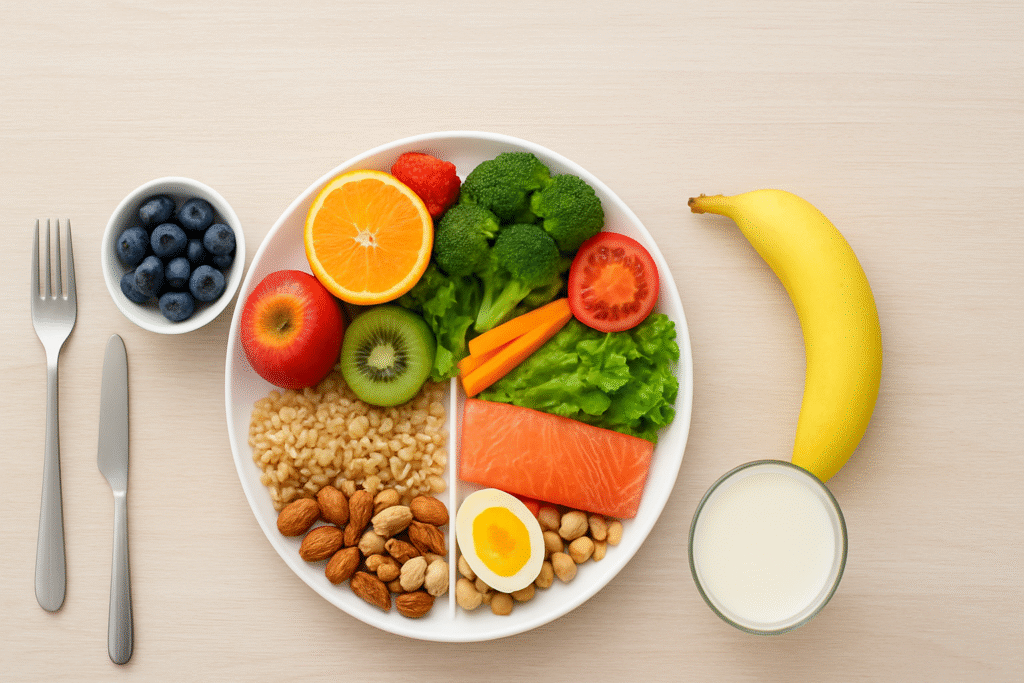
🍽️ Portion Size & The Plate Method
A simple way to balance meals is the Harvard Plate Method:
- ½ plate: vegetables & fruits
- ¼ plate: whole grains or carbs
- ¼ plate: lean protein
- Add a small serving of healthy fats (olive oil, nuts, avocado).
⚠️ Common Diet Mistakes to Avoid
- ❌ Skipping meals (leads to overeating later).
- ❌ Too much sugar (hidden in sauces, snacks, drinks).
- ❌ Not enough fiber (causes digestive issues).
- ❌ Over-relying on supplements instead of whole foods.
🗓️ Sample One-Day Balanced Diet Plan
Breakfast 🍳
- Oats with berries, chia seeds, and almond milk.
Mid-Morning Snack 🍌
- Banana + handful of almonds.
Lunch 🥗
- Grilled chicken/fish (or tofu), brown rice, mixed veggies.
Evening Snack ☕
- Green tea + whole grain crackers with hummus.
Dinner 🥘
- Lentil soup, quinoa, salad with olive oil dressing.
Before Bed 🍵
- Chamomile tea for better sleep.
🎯 Conclusion
A balanced diet isn’t about restrictions — it’s about nourishment.
When you focus on variety, portion control, and consistency, you’ll feel more energetic, improve immunity, and protect yourself from lifestyle diseases.
👉 Start small: Add one fruit, one veggie, and one glass of water extra to your daily routine. Small steps lead to big changes!
✨ Stay tuned to Daily Health Boosts for more simple, science-backed health tips.


One comment on “The Ultimate Guide to a Balanced Diet for Better Health”